Peak load is one of those energy costs that can quietly affect your electricity bill. You may be using the same machines, running the same operations and consuming roughly the same amount of energy — yet your bill can still go up. Why?
Because with commercial and industrial power, when you use electricity can matter almost as much as how much you use.
Understanding Peak Load & Energy Demand
Peak demand can affect your energy costs in different ways. See how demand spikes, operating patterns and energy storage can influence your facility's power usage.
The Problem Starts With a Demand Spike
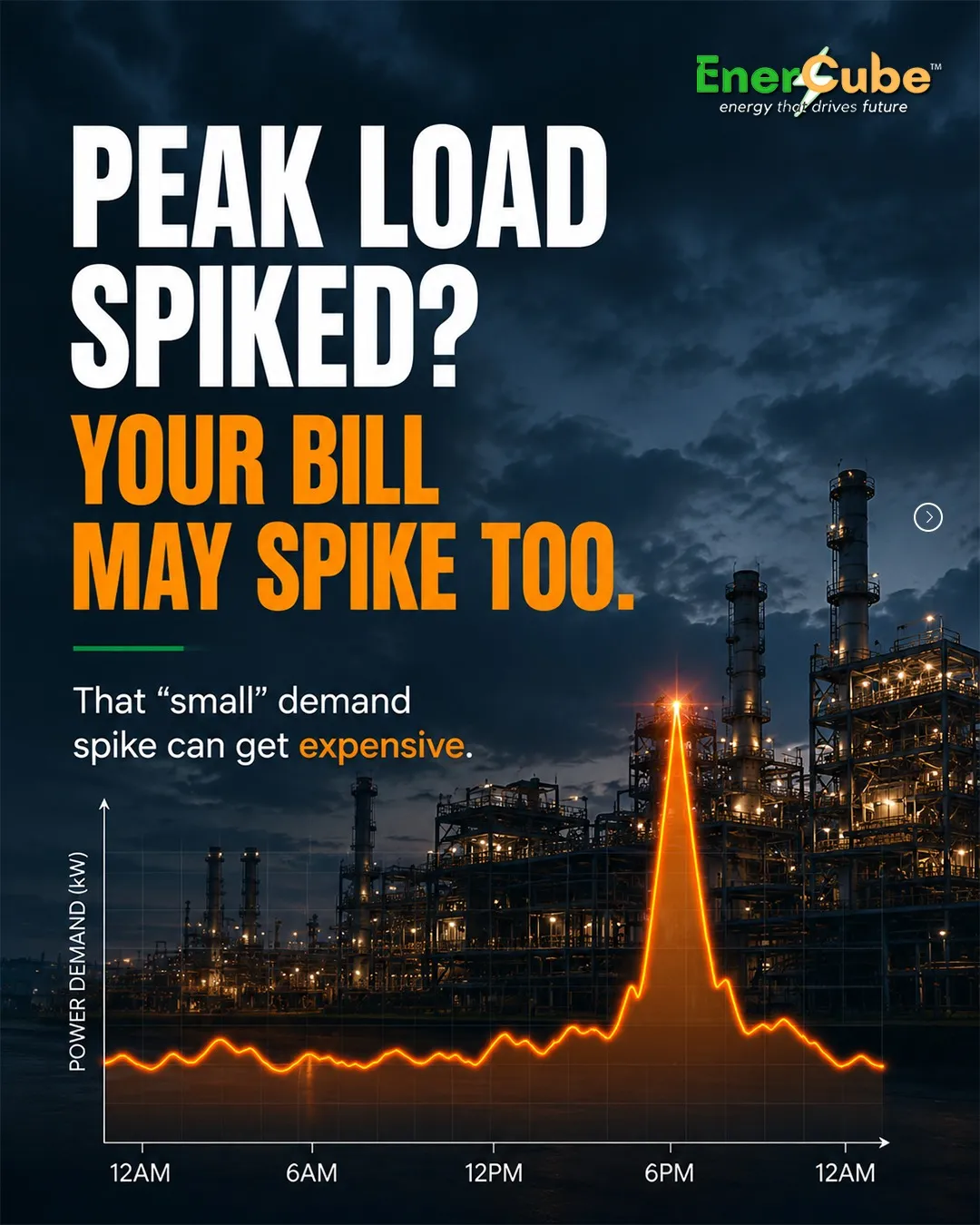
Imagine a factory starting several heavy machines at the same time.
Your production is running normally, but suddenly the facility needs much more power than it did a few minutes earlier. That short period of high demand can push your peak load up.
And when peak demand happens during a high-tariff period, the impact on your electricity costs can become even more noticeable.
This is why simply looking at your monthly units consumed doesn't always tell the full story.
Your energy bill has a timing problem too.
Why Does Peak Load Increase?
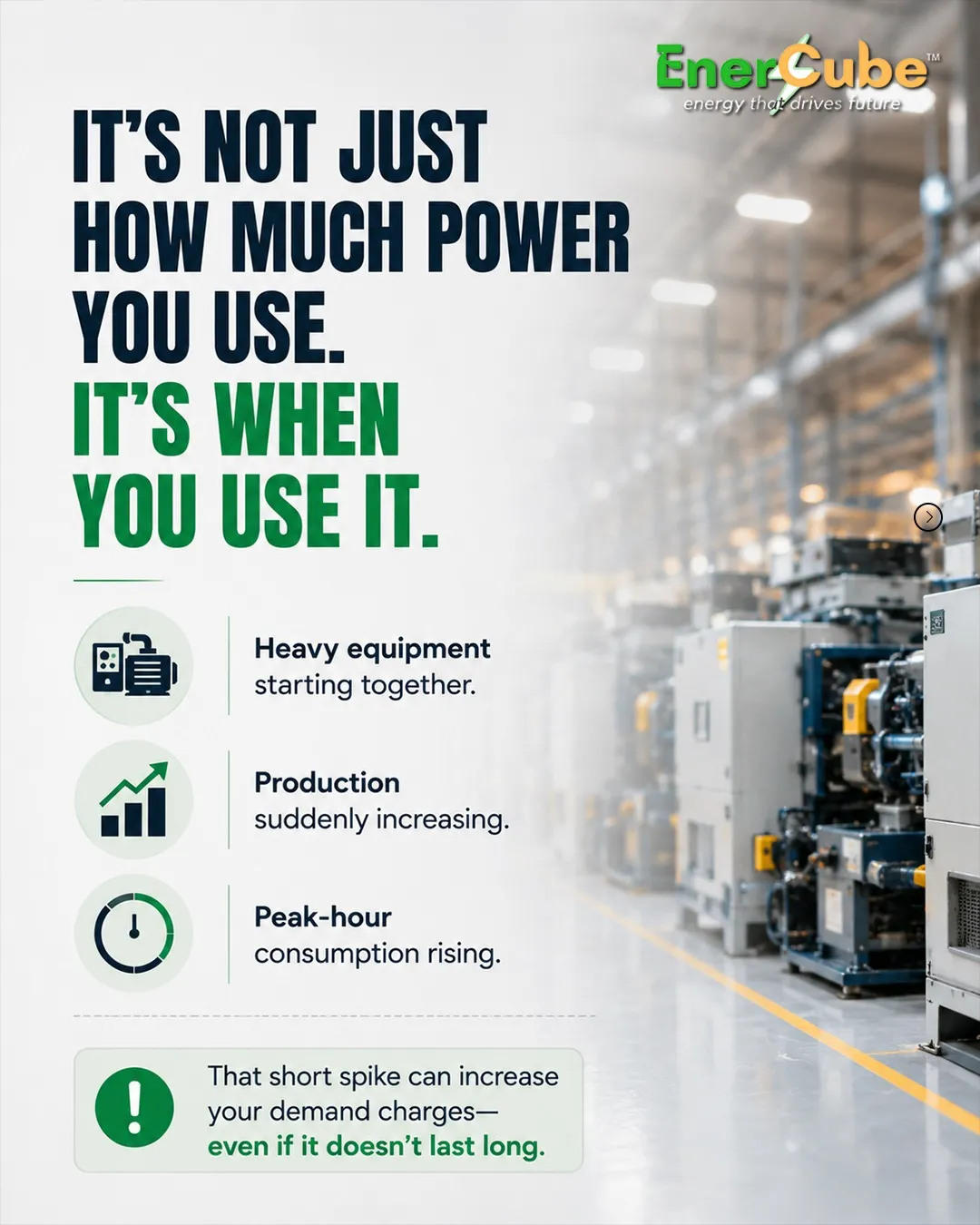
Peak demand can happen for simple reasons:
Heavy Machines
Multiple heavy machines starting together.
Production Increase
Production increasing during certain shifts.
HVAC & Cooling
Large HVAC or cooling systems running simultaneously.
Pumps & Motors
Compressors, pumps or motors switching on together.
TOD Peak Hours
Higher electricity usage during TOD peak hours.
The spike may not last very long. But that doesn't mean it should be ignored.
For an energy-intensive business, even short periods of high demand can have a real impact on operating costs.
It's Not Always About Using Less Energy
This is where many businesses look at the problem from the wrong angle.
Reducing unnecessary consumption is important, but you can't simply switch off production whenever demand rises.
Your machines need to run. Your facility needs to operate. Your business needs to keep moving.
Can you manage when you draw power from the grid?
That's where energy storage becomes interesting.
How Can BESS Help?
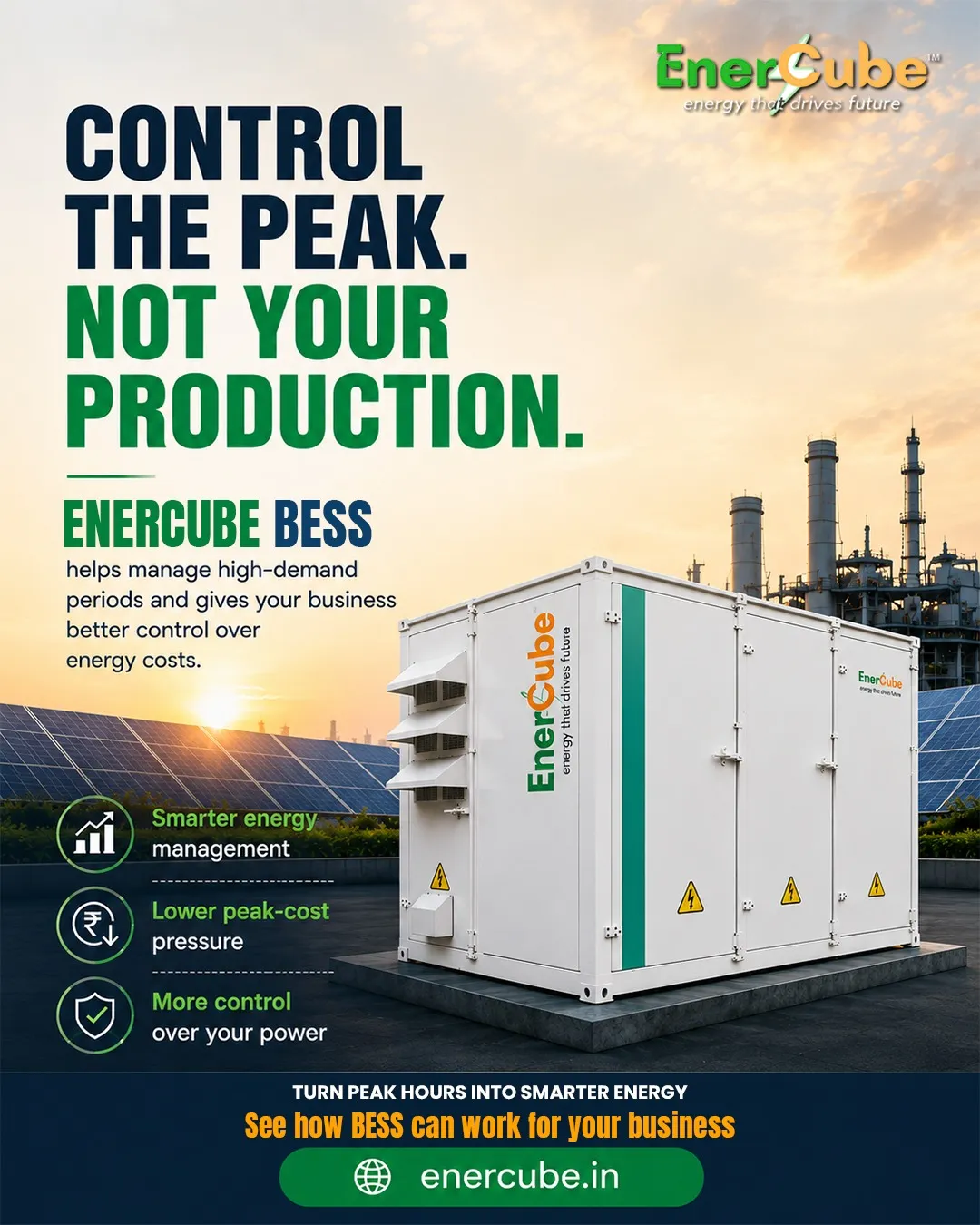
A Battery Energy Storage System (BESS) gives businesses another way to manage their power.
Energy can be stored when conditions are more favourable and then used to support the facility when demand is high.
During a peak period, the BESS can help reduce the amount of power being drawn from the grid, depending on the system design, load profile and operating strategy.
Peak Shaving
The goal isn't to change how your business operates.
It's to make your energy usage smarter.
Think of BESS as an Energy Buffer
A simple way to look at it:
And when solar is part of the system, the opportunity can become even more useful.
Surplus solar energy generated during the day can potentially be stored and used later when the facility needs it.
The Right BESS Depends on Your Business
There isn't one BESS size that works for every factory, warehouse, commercial building or industrial facility.
Your requirement depends on things like:
Peak Load
How high does your demand actually go?
Load Profile
When does your demand increase?
Operating Hours
When is your facility consuming the most energy?
Tariff Structure
When are your electricity costs highest?
Critical Loads
Which systems need to keep running during an outage?
Solar Generation
How much energy are you generating, and when?
These numbers help determine whether energy storage makes sense and what kind of solution is appropriate.
So, What Happens When Your Peak Load Hits?
Your business doesn't necessarily need to consume less.
It may need to manage its energy better.
That's the thinking behind EnerCube BESS — helping businesses look beyond simply buying electricity and start thinking about when, where and how that electricity is used.
Whether your priority is peak-demand management, solar energy utilisation, backup support or a combination of these, the first step is understanding your actual energy profile.
Don't Guess Your BESS Requirement. Start With Your Numbers.
If peak demand is putting pressure on your electricity costs, talk to EnerCube and explore what energy storage could look like for your facility.